See the enterprise
Gyroscope
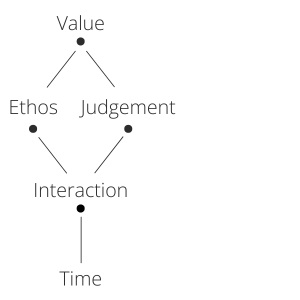
The Stewardship Gyroscope is a simple orientation device.
It represents the elements that recur throughout this work:
The gyroscope is not a framework or methodology. It is a reminder that stewardship is the disciplined exercise of judgement in living enterprises, where value, ethos, interaction and time must continually be held in view together.
Praxis 1 — Business Model Inquiry (BMI)
The first act of stewardship praxis
Purpose
To make the enterprise’s business model explicit, testable, and economically grounded before strategy formulation.
Outside-In Fit (Context First)
The Enterprise Claim (The Model)
Economic Logic (Minimum Necessary Economics)
Stewardship test: Where are we borrowing success from the future?
Burdens, Risks, and Boundaries
Stewardship test: What would erode our licence to operate?
Provisional Holding
Output
A plain-language business-model statement, explicit economic assumptions, and clear conditions for revision or exit.
Not strategy. Not a canvas. Not a forecast. Not innovation theatre. It is responsibility-taking.
Fitness to grow
Growth is not a strategy — it is a test of the enterprise’s ability to sustain value.
Buisiness model inquiry
Add short description